
Introduction to surgical informed consent
Master the theoretical foundation for surgical informed consent discussions.

What is surgical informed consent?
Definition and purpose
Surgical informed consent is a respectful, transparent conversation in which patients receive clear information about their surgery and can make a voluntary, well-considered decision. It goes beyond a signature and is built on trust, open dialogue and support tailored to each patient's needs and values.
Key elements:
-
Surgeon provides comprehensive information about the surgery.

-
Patient is able to understand and make an informed decision.
-
Patient decides freely, without pressure or coercion.

Time is limited!
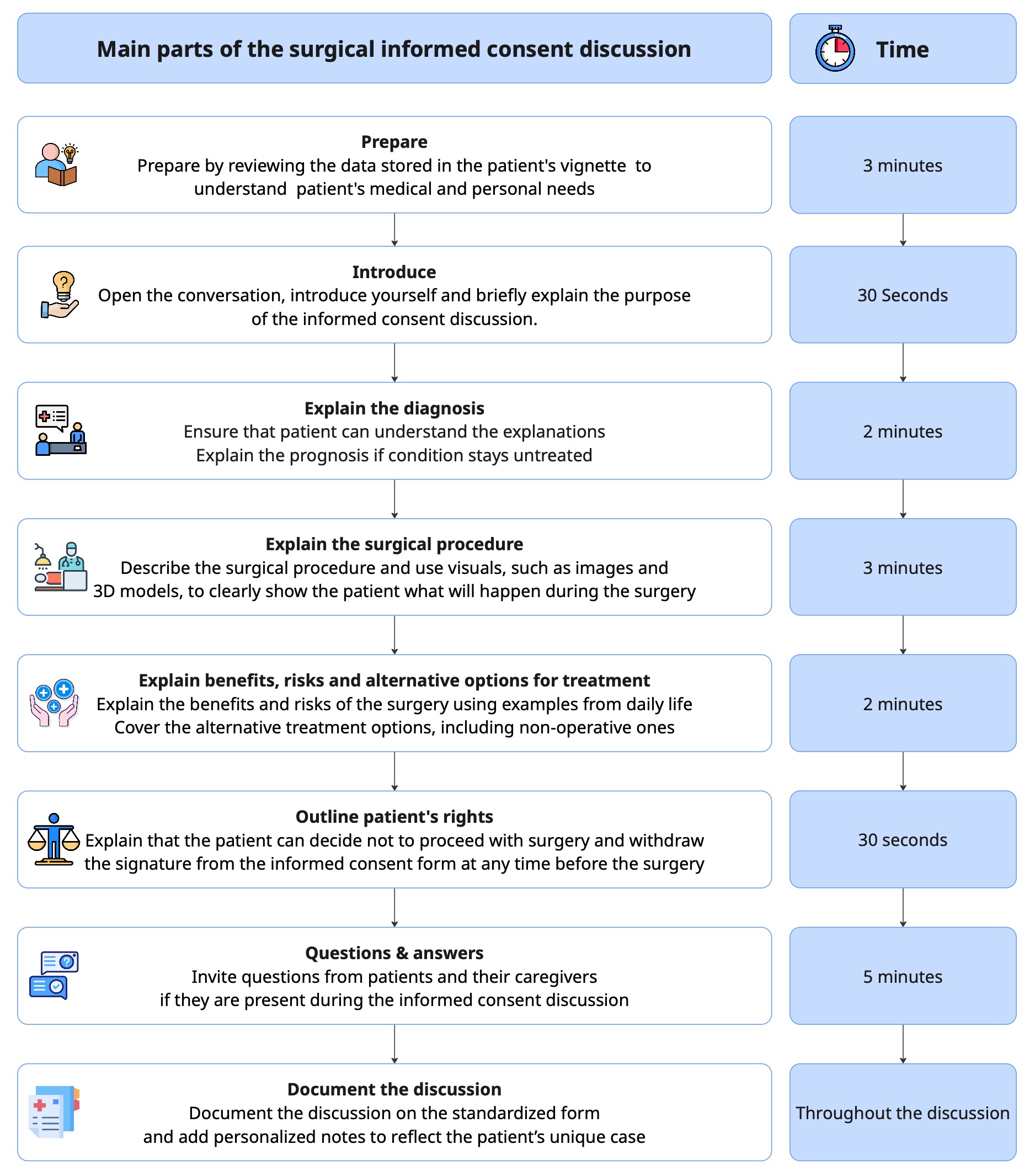
Informed consent discussions are usually conducted within 10 to 15 minutes.

Overview of the informed consent process
Structure and main steps
The diagram below outlines the key stages of a surgical informed consent discussion, with the recommended time allocation for each step.
Don't forget the consent form!
After the discussion, patient signs the consent form if they agree to the surgery. You have to inform the patient that signing the form is not mandatory and that they can withdraw their consent at any time before the surgery.

Patients' needs
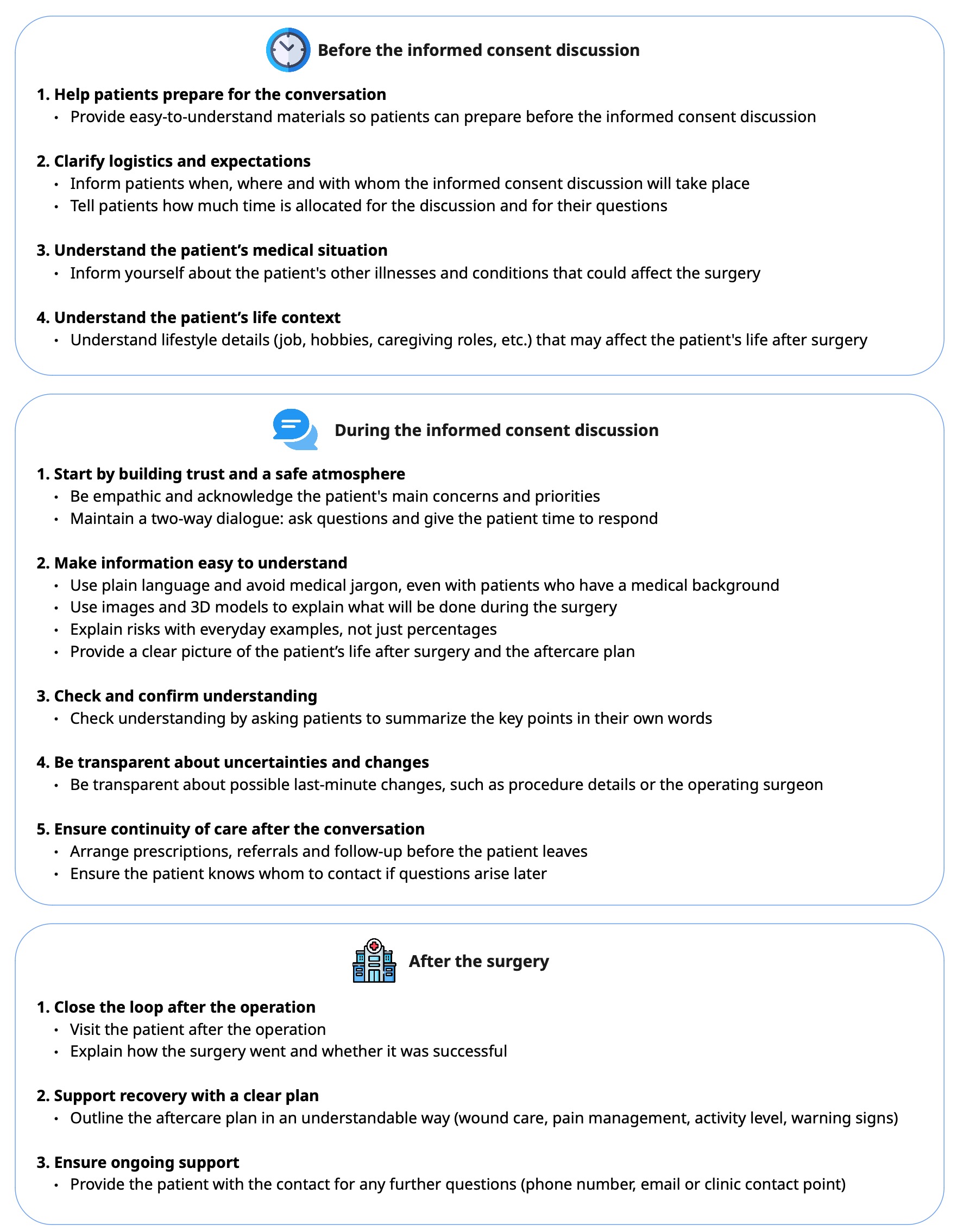
Patient needs before, during and after the informed consent discussion
The figure below presents the various needs patients may have before, during and after the informed consent discussion. Addressing these needs is crucial for effective communication and ensuring patients feel supported throughout the process.

Every patient is unique!
Keep in mind that every patient has individual needs, preferences and concerns. With SurgiBot, you will learn how to tailor your communication approach to each patient's unique situation and ensure they feel heard and respected.